
Escena de Laissez-moi (2023)


Detalles de la escena
| Duración: 481 seg.. | Desnudez: yes | Creador: supers992 |
| Nuevo tamaño de archivo: Loading... | Sonido: yes | Tamaño de archivo anterior: 482 mb |
| Formato de archivo: AOMedia Video 1 (WebM/AV1) | Resolución: 1800x1080 | Agregado: 2025-11-10 |
Actrices en esta escena

Nombre de nacimiento: Jeanne Balibar
Fecha de nacimiento: 1968-04-13
Lugar de nacimiento: Paris, Île-de-France, France
Carrera
Primeras apariciones:
Roles más importantes:
Puntos destacados de la carrera:
Premios
Premios:
Biografía completa
Jeanne Balibar, born on April 13, 1968, in Paris, is a prominent French actress, singer, and occasional director. The daughter of a Marxist philosopher and a physics scientist, she initially pursued history studies before training at the prestigious Conservatoire national supérieur d'art dramatique in Paris.
Balibar began her career on the stage, notably at the Festival d'Avignon and as a pensionnaire of the Comédie-Française, before transitioning to film. Her film debut was in Arnaud Desplechin's 1992 film The Sentinel. Throughout her extensive filmography, she has collaborated with acclaimed directors such as Olivier Assayas, Jacques Rivette, Michael Winterbottom, and Mathieu Amalric. She gained significant recognition for her role in Assayas' Late August, Early September, earning the Best Actress Award at the San Sebastián International Film Festival in 1998. Her portrayal of the French singer Barbara in Amalric's 2017 film Barbara earned her both a César Award and a Prix Lumières for Best Actress. She has also appeared in major international films like the Oscar-nominated Cold War (2018) and the Cannes Jury Prize-winning Les Misérables (2019).
In addition to her acting work, Balibar is an accomplished singer, having released several albums, including Paramour (2003) and Slalom Dame (2006). Known for her intellectual approach and versatile talent, she divides her time between Paris and Berlin, where she frequently performs in German theater productions directed by Frank Castorf.
Sobre la película: Laissez-moi (2023)
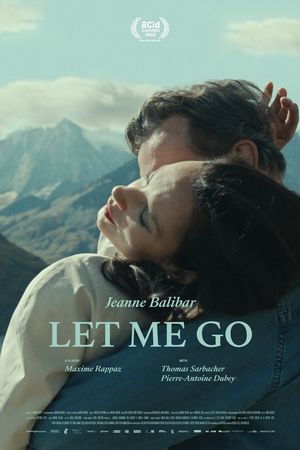
Año de lanzamiento: 2023
Nación: Belgium, France, Switzerland
Título alternativo: Let Me Go, Deixe-me, Fass mich an, Solo per una notte, 山逢いのホテルで, Låt mig gå, 情慾出走的女人, Bırak Beni
Director: Maxime Rappaz
Guionista: Florence Seyvos, Marion Vernoux, Maxime Rappaz
Producción & Género
Productor(es): Producer: Michel Denis, Gabriela Bussmann, Yan Decoppet
Co_Producer: Micha Wald, Alexander Weiss, Gladys Brookfield-Hampson, Camille Genaud
Compañías: Fox the Fox (BE), GoldenEggProduction, Paraíso Production, RTS
Género: Drama
Premios & Similares
Premios:
Similar: N/A
Palabras clave
Palabras clave: 1990s, disabled son, female full frontal nudity, female nudity, female pubic hair, female rear nudity, female tailor, horny woman, male nudity, male rear nudity, mentally retarded son, mistaken for prostitute, naked female breasts, sex scene, single mother, woman has sex with strangers, woman seduces a man
Historia
Claudine, a single mother, maintains a weekly routine where she visits a mountain hotel every Tuesday to engage with strangers who are merely passing through. This secret life is disrupted when one of her encounters decides to extend his stay specifically to spend more time with her. As their connection deepens, Claudine finds herself yearning for a different life away from her responsibilities.
Resumen
'Laissez-moi' (2023), directed by Maxime Rappaz, is a Belgian-French-Swiss drama set in the 1990s. The film centers around Claudine, a woman leading a double life, juggling motherhood and her secret sexual encounters with strangers at a mountain hotel each Tuesday. When one of these men decides to prolong his stay for her, Claudine's carefully maintained balance is thrown off, stirring within her desires for an alternative life. The narrative explores themes of liberation, self-discovery, and the complexities of maternal responsibility, all while navigating sensitive subjects such as disability, as Claudine's son has mental retardation.